Act I — Entering the trance
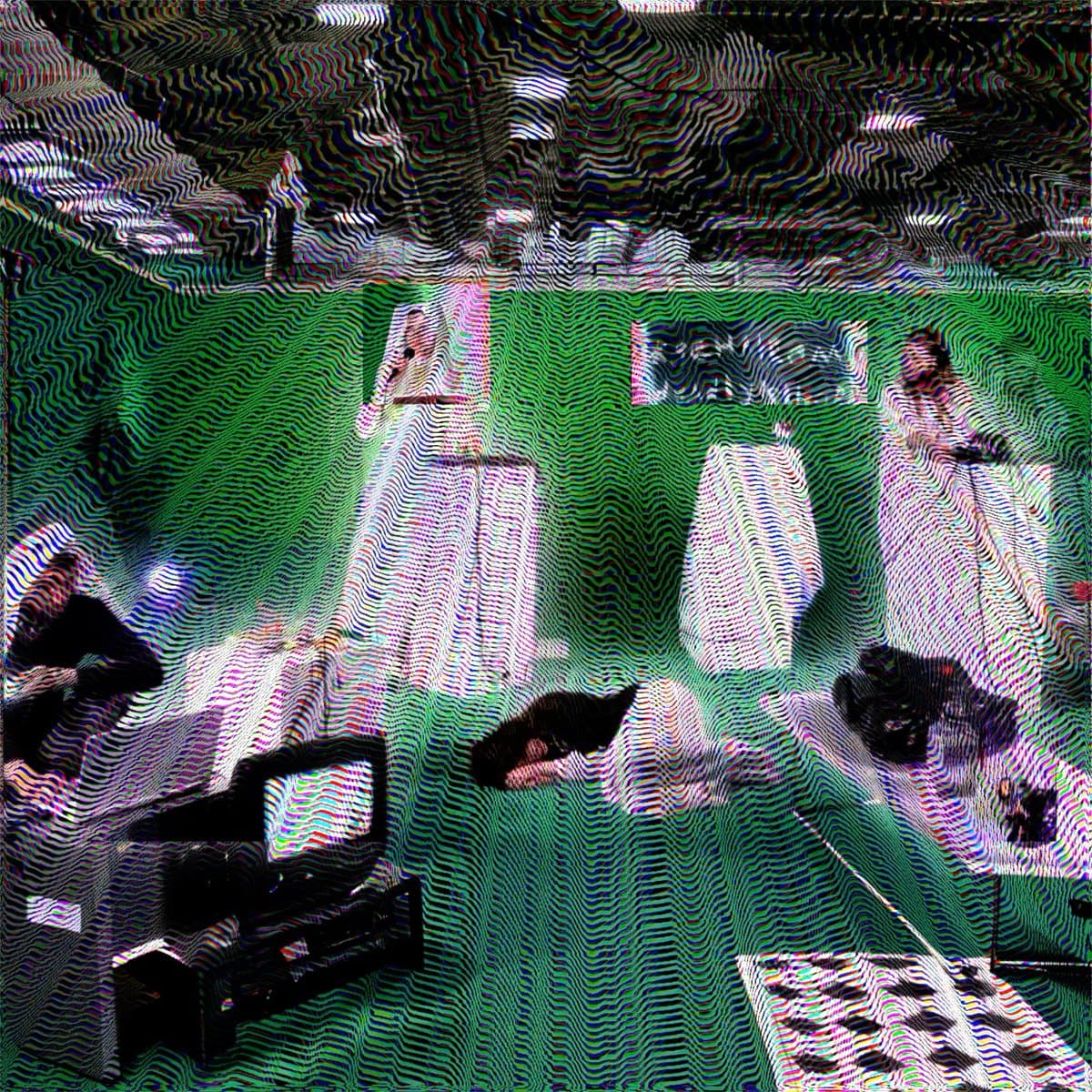
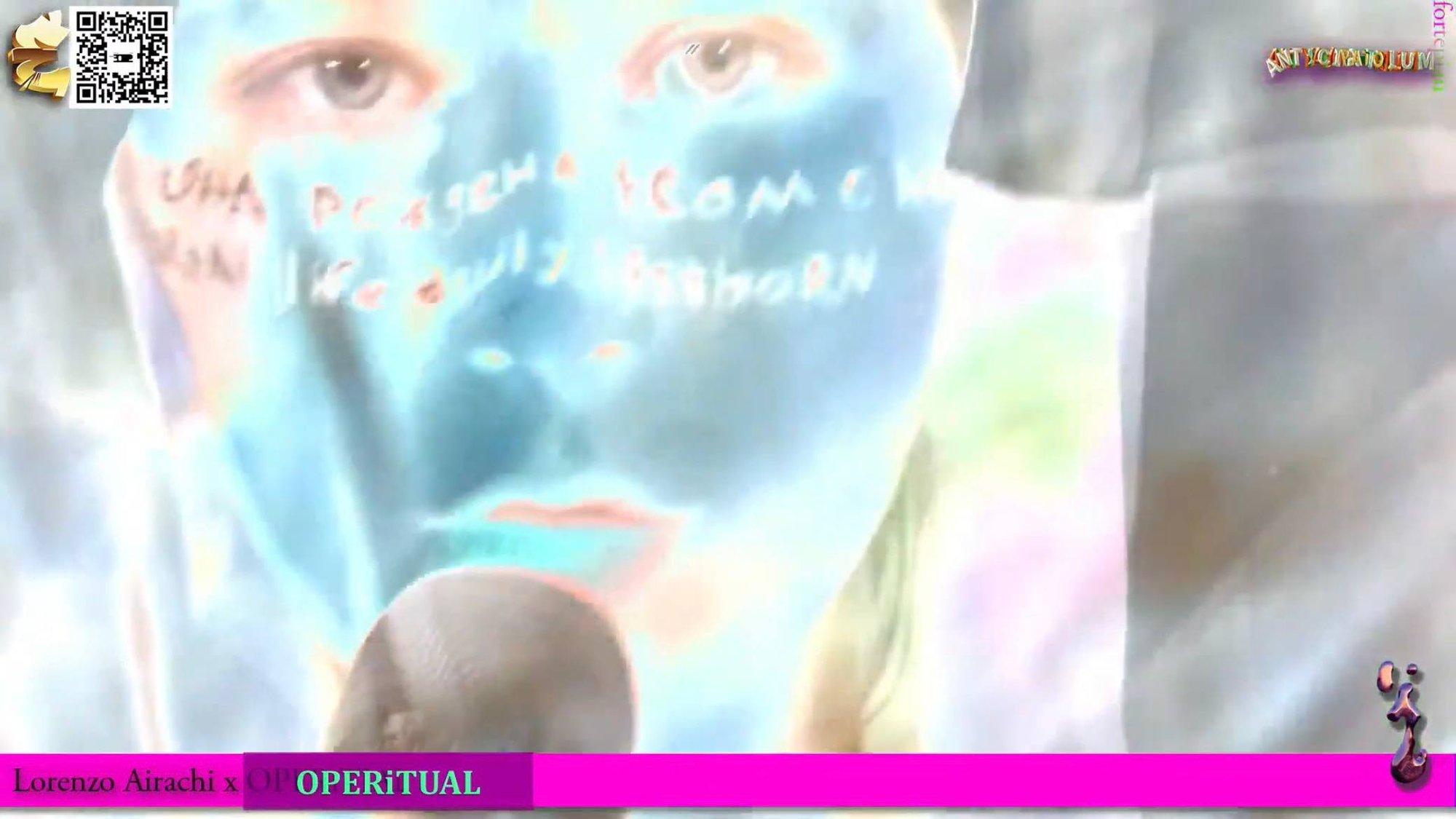
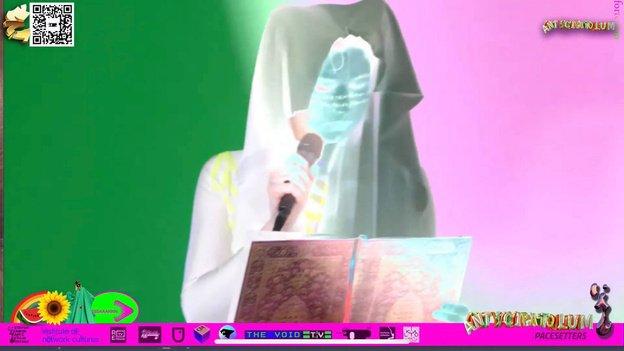
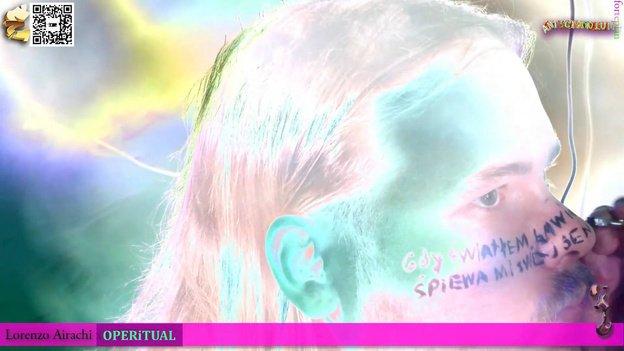
White pedestals and costumes turned the space into something like a sacred feast. Sofiia recited a mantra she wrote herself, part prayer and part hymn of praise, in Ukrainian and English. Fragments of "Ukraina 86" by Osiedelec played as a gesture of memory. Alongside the text came the ritual actions: a dance tracing the circulation of energy, and words written onto participants' faces as an initiation into the rite.
Act II — Ritual and response
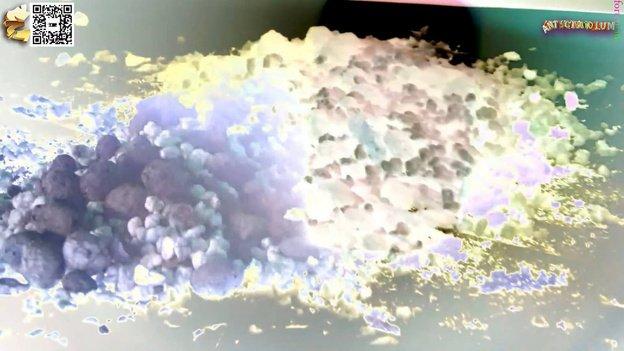
The action centred on five tables standing for the elements: sand, light, mechanism, sound, and water. Each came with its own ritual formula ("як в піску я копаюся — з атомною енергією єднаюся", "as I merge with every sound, atomic echoes spin around"). Performers and audience drew in the sand and arranged stones, becoming co-authors of the ritual. The technology (TouchDesigner, an electronic synth, a Korg Kaoss Pad) was part of the sacred action, not a backdrop to it. A key moment was the radio's "answer": a receiver placed near the nearby power plant gave back a calm, gentle signal that the room took as a blessing.
Act III — Explosion and gnosis
The finale built through rising music, voice, and glitch visuals, with the lines "ядерним світлом ми осяяні / ядерним словом ми сказані / ядерним ми є" — by nuclear light we are illuminated, by the nuclear word we are spoken, nuclear we are. The lowest pedestal held a mirror that returned the audience's own image to them, making them participants. At the centre stood a black "cloud" of cables, light, and foil bags glowing from within, like a body raised from the dead, or a Pandora's box. It was never opened. That final opening was left to each viewer, as inner work.
Watch the performance
Symbolism and aesthetics
The whiteness and "sacred" look deliberately pushed against the stereotype of nuclear energy as purely dark and destructive. The choice was confrontational: to show that fear of the atom mirrors our fear of what we ourselves have made, a metaphor the mirror made literal. Glitch and noise gave the "nuclear goddess" a visual and sonic body: chaotic and overwhelmingly powerful. The five elements acted as intermediaries, a semantic magic for making contact with the atom's energy.
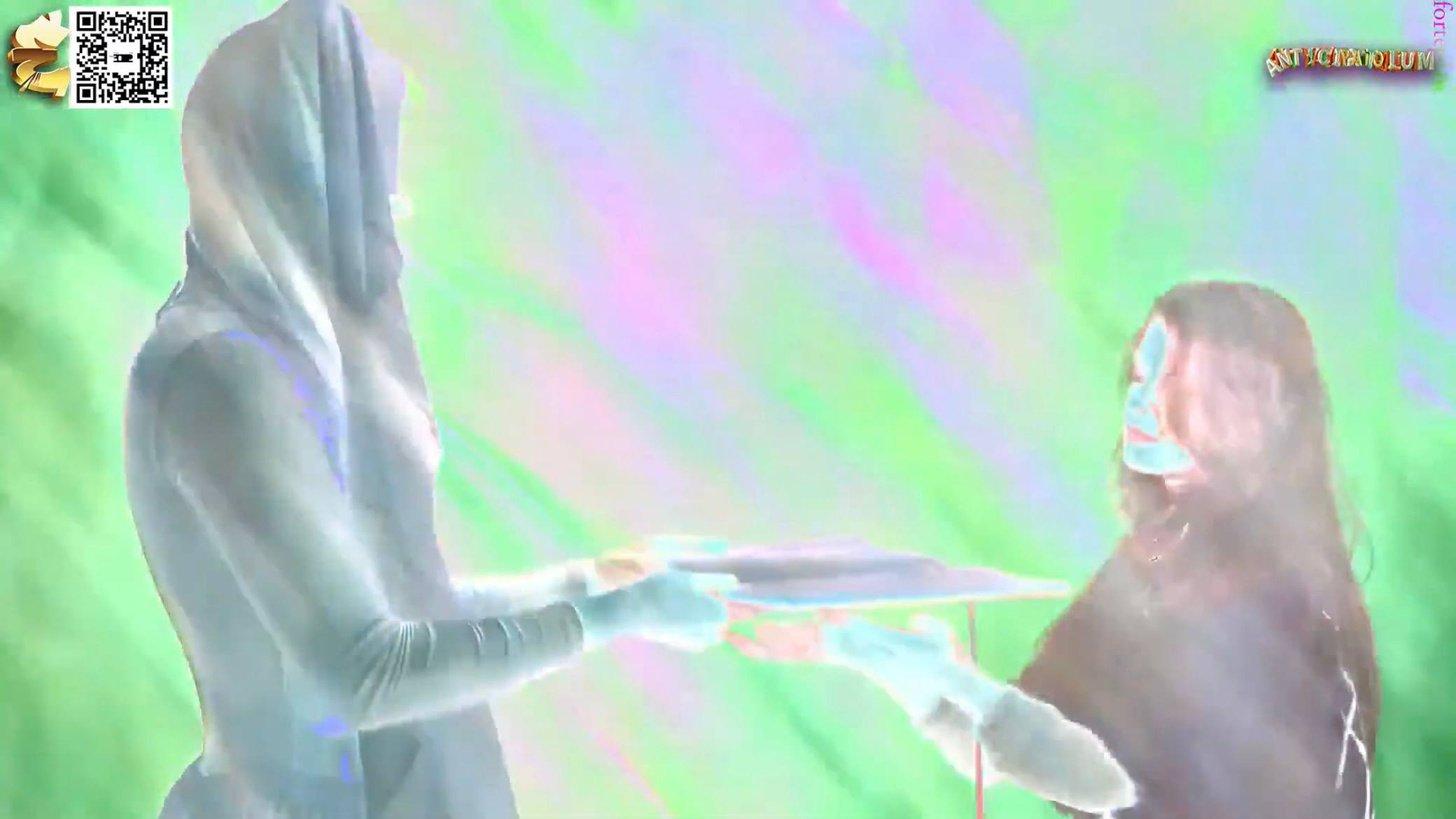
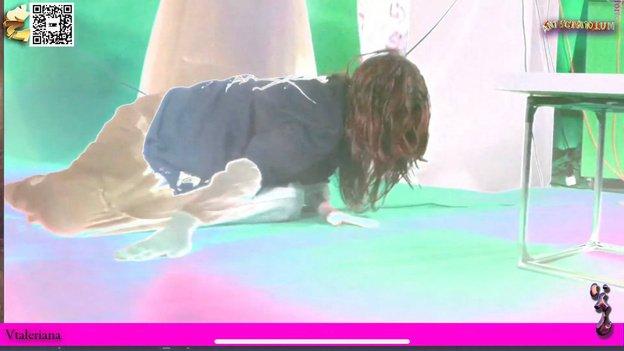
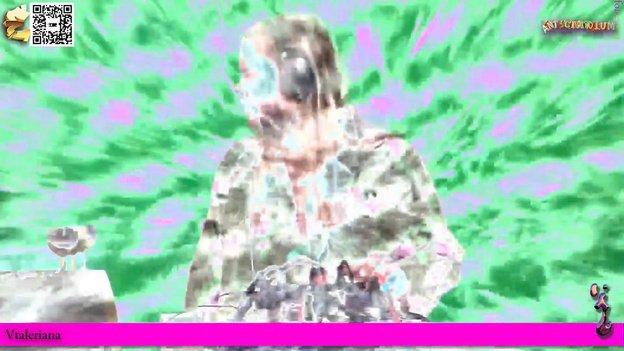
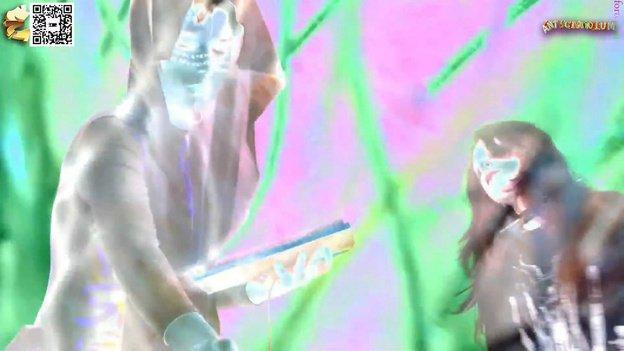
Sofiia went into the immersion without fear, as the initiator inviting the energy in. The audience fell into a kind of trance: some held an enchanted stillness, others physically joined in, drawing in the sand and laying stones. Nuclear Gnosis ended up being less an art event than a collective practice of remembering 1986, one that left each viewer with a trace and room to continue the ritual inside themselves.